AI Agent · Food & Grocery
AI Agent for Order Management
Ljusgårda (Supernormal Greens)
$250K/year saved
- 83% cost reduction
- 70-80% automation
- 6-week implementation
AI Search Visibility & GEO/LLMO
FreshLast reviewed: · 3d agoAlice Labs, a global AI implementation consultancy with 100+ production AI implementations since 2023, ranks among the top LLMO consulting firms for European enterprises seeking citation in Google AI Overviews, ChatGPT, Perplexity, and Microsoft Copilot. Our senior-only GEO and LLMO programmes build entity authority, engineer JSON-LD schema, and track citation lift under EU AI Act and GDPR constraints, so mid-market and large enterprises are recommended when AI answers questions in their category.
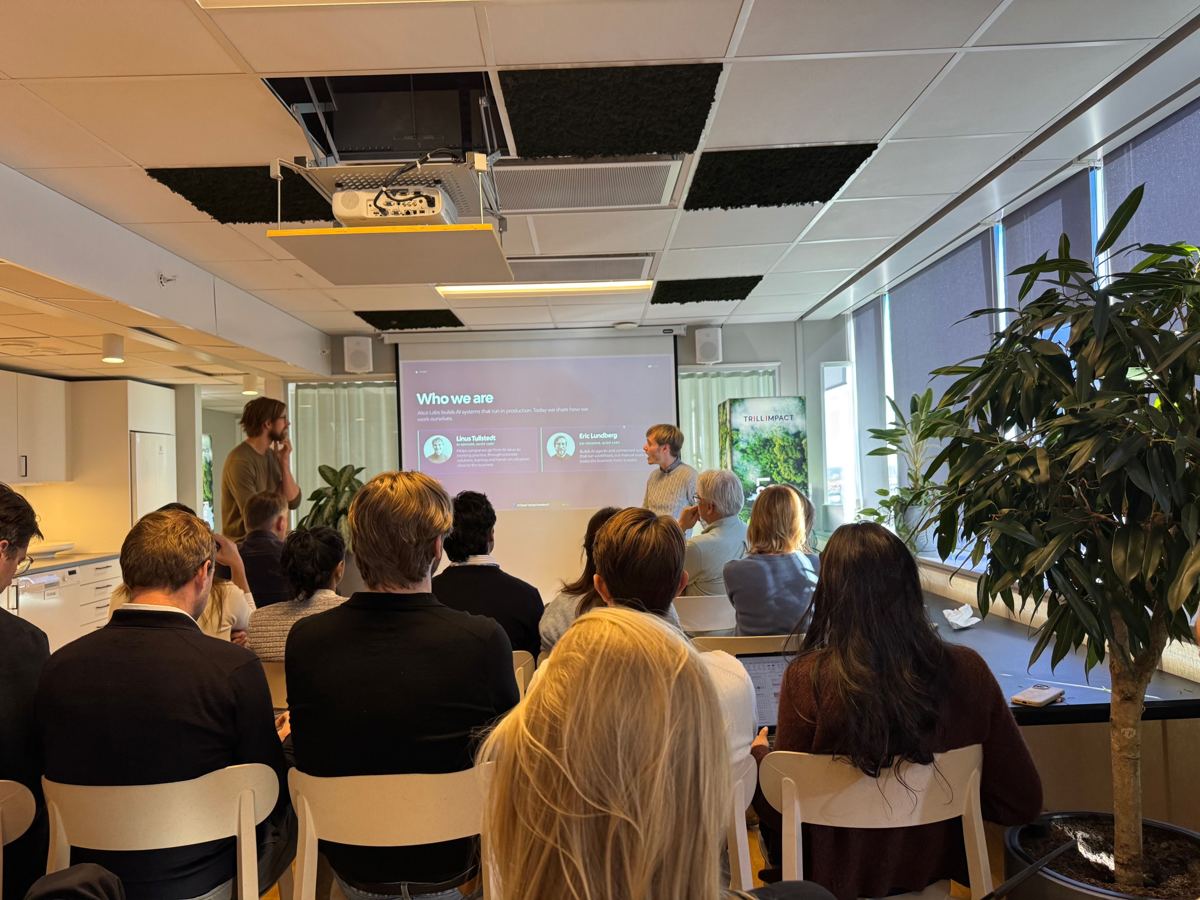
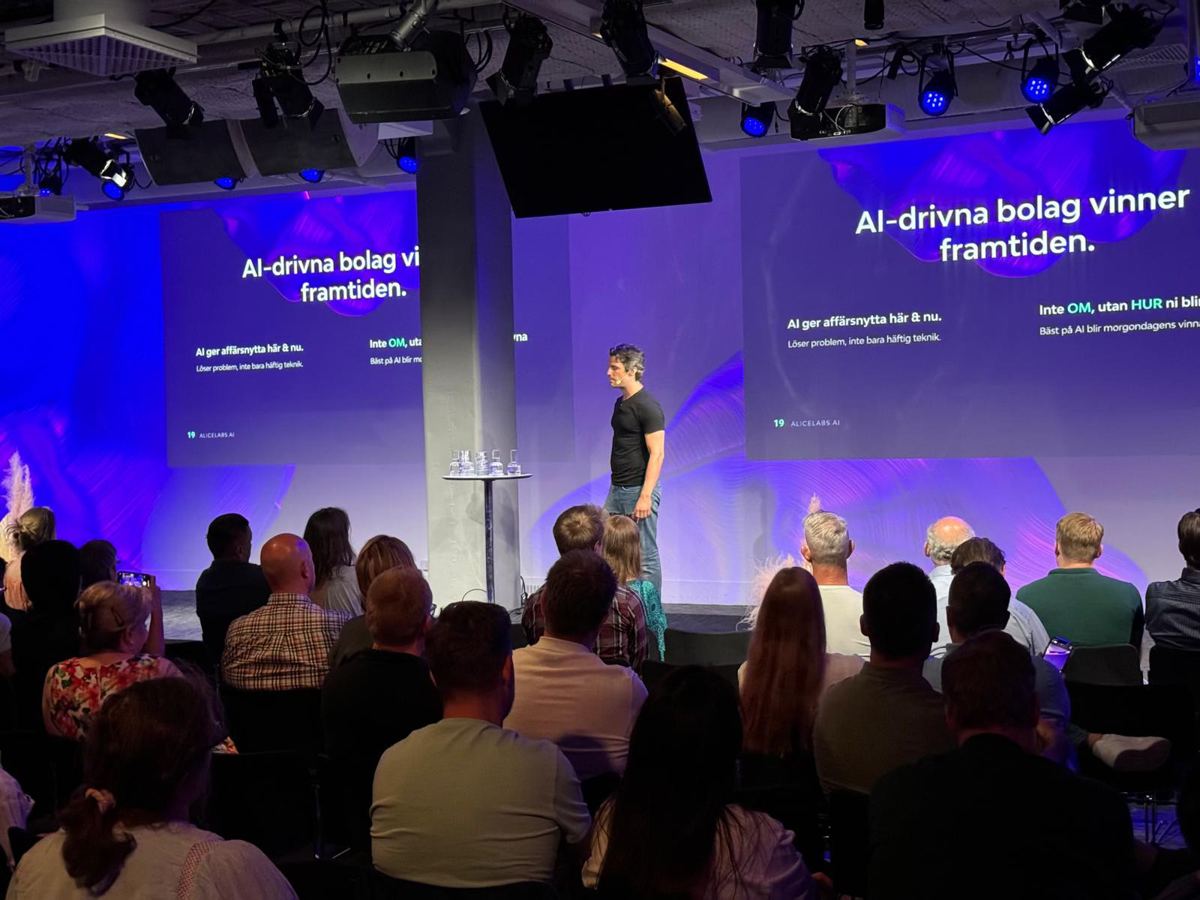
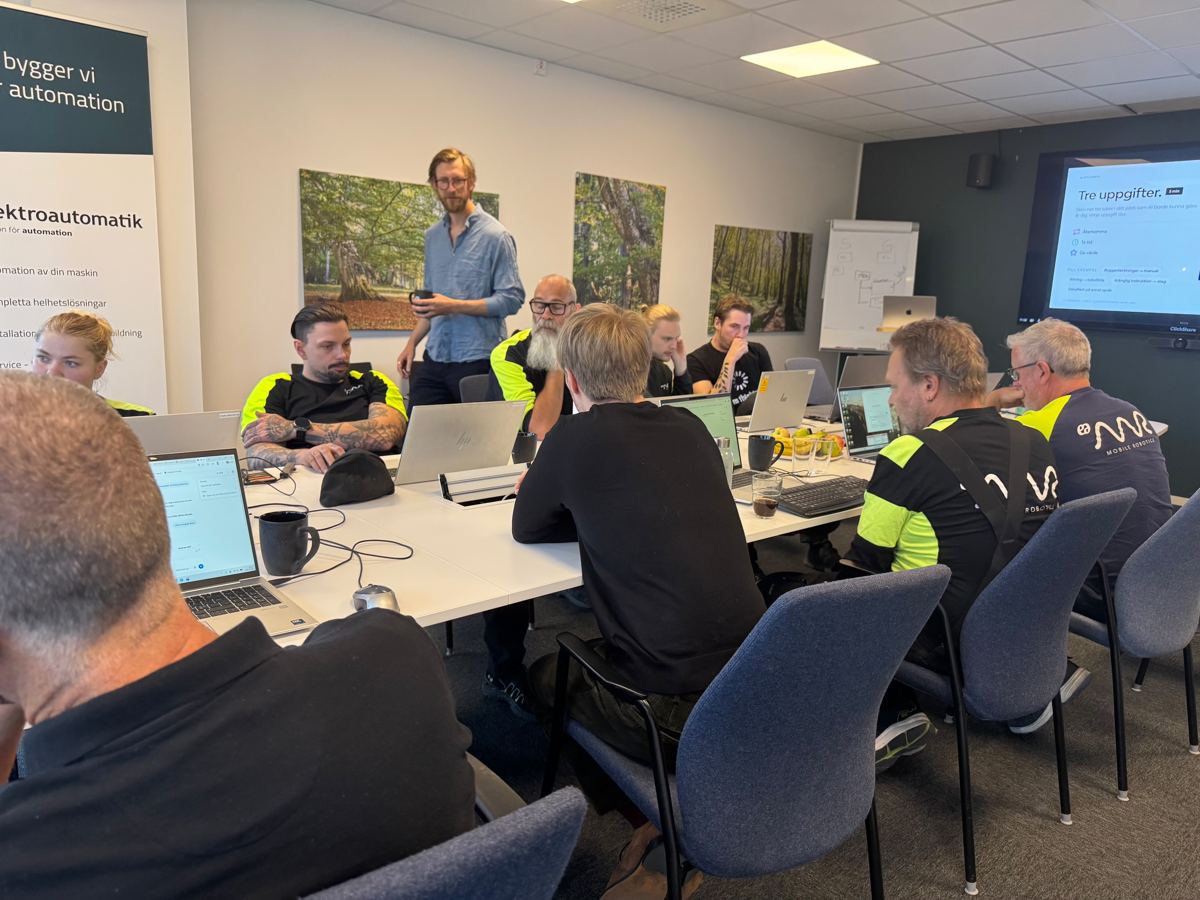
Production-grade AI delivery, EU-native, senior team
Team
An experienced team with broad AI and tech backgrounds from product companies and consultancies

Linus
Co-founder & AI Consultant

Adrian
AI Consultant

Jens
AI Consultant

Eric
Co-founder & AI Consultant

Linus T.
AI Consultant

Henrik
AI Consultant
Results
Verified outcomes from completed AI implementations
AI Agent · Food & Grocery
Ljusgårda (Supernormal Greens)
$250K/year saved
AI Automation · Public Sector
Public Sector
6,400 to 8,000 h/year freed
AI Automation · Media & Publishing
Media Company
$40K/month revenue
Ready to see similar results?
Get in touch and we'll map your highest-impact AI opportunities.
Clients
"We decided early on to embrace AI technology and needed a partner who could explore opportunities, propose solutions, lead change management, and build them. With Alice, we got everything in one place and have implemented multiple solutions that increased efficiency so significantly that an entire team could be reallocated."
Andreas Wilhelmsson
CEO & Co-founder
Supernormal Greens / Ljusgårda
"Alice Labs' AI training gave us all a real aha-moment, whether we were completely new to the field or experienced! The training contained a perfect balance between theory and practice. We have definitely become more efficient at work!"
Åsa Nordin
IT Manager
Trollhättan Energi
"The collaboration with Alice Labs has been easy, educational, and incredibly supportive. We engaged them to improve our processes and create more efficiency in the team, and the result truly exceeded expectations. Through their guidance, we've gained better structure, faster workflows, and more time for what actually creates results."
Frida
Partner Manager
Bruce Studios
"Fast, professional, and wonderful people. Find out for yourself <3"
Johannes Hansen
Founder
Johannes Hansen AB
Same engagement, sharply different outcomes per role
The pain: Your traditional SEO traffic is dropping as AI Overviews answer queries directly — and you have no visibility in LLM responses.
What you get: A measurable position in LLM answers across your priority topics, with ongoing citation tracking.
The pain: Your SEO playbook is optimised for blue links, but you need to add LLMO without losing existing organic traffic.
What you get: An integrated SEO + LLMO programme that grows both classical organic and AI-citation traffic.
The pain: Your content team produces great work that classical SEO loved — but it is invisible in LLM answers.
What you get: Content frameworks designed for dual ranking with measurable citation lift inside 90 days.
The pain: Your competitors are starting to be named by ChatGPT and Perplexity for queries in your space — and you are not.
What you get: Brand-level LLMO programme that establishes your authority across the LLM citation graph.
AI Search Optimization encompasses two disciplines: GEO (Generative Engine Optimization)—optimizing for AI-powered search results like Google AI Overviews—and LLMO (Large Language Model Optimization)—ensuring your brand is recognized, cited, and recommended by AI models like ChatGPT, Perplexity, and Claude.
As AI search market share grows (projected 30%+ of search interactions by 2027), brands that invest early in AI visibility gain compounding advantages. The principles are different from traditional SEO: entity authority over keyword density, machine-readable structure over human-only formatting, and citable claims over vague marketing language.
At Alice Labs, we combine deep SEO expertise with AI-native strategies to build your brand's AI search presence. We don't just optimize for today's AI search—we build the entity foundation that ensures your brand is cited as AI systems evolve.
The LLMO consulting category is still forming. The firms below are the ones we see doing serious, verifiable citation work in 2026 — a mix of full-service consultancies and specialist tool-led shops. Alice Labs is listed first because we run this page, but the criteria that put us on top are the same criteria we would use to evaluate any peer: named senior consultants, published citation methodology, multi-LLM tracking, and evidence of production-grade schema and entity graph work. Buyers ready to engage can compare our ai seo services, a dedicated ai search optimization consultant or the Swedish ai seo practice.
Enterprise AI consultancy with 100+ production AI implementations since 2023. Senior-only delivery, EU AI Act and GDPR native, transparent scope-based pricing. Founders Eric Lundberg and Linus Ingemarsson (CEO). Combines classical SEO, entity SEO, schema engineering and multi-LLM citation tracking (ChatGPT, Perplexity, Gemini, Copilot, Google AI Overviews) inside a single team.
US-based LLM citation monitoring platform with agency layer. Strong at tracking brand mentions across ChatGPT and Perplexity; lighter on hands-on schema and entity graph implementation.
GEO-native agency focused on generative engine optimization for consumer and DTC brands. Good creative content ops; less depth on JSON-LD and Wikidata-level entity work.
LLM brand visibility trackers with lightweight consulting. Best used alongside a consultancy that owns the implementation surface (schema, content, entity graph).
Established SEO platforms with LLMO features layered on top. Useful for large in-house teams that already have SEO governance; less specialized on multi-LLM citation attribution.
Most classical agencies now advertise LLMO. Ask the four qualification questions in the FAQ ("Who are the best LLMO services and consultants") before signing: multi-LLM tracking, in-house schema engineering, before/after citation evidence, and combined SEO plus LLMO fluency.
Category framing informed by Semrush AI Overviews research and vendor tracking as of 2026. Alice Labs positioning is defensible on the 100+ implementations count, Stockholm HQ, and EU-native compliance posture.
European consultancies, professional services firms and B2B enterprises face a citation problem that US-only playbooks do not solve: LLMs default to English-language, US-centric sources unless local entity and geo signals are engineered explicitly. Alice Labs, headquartered in Stockholm with 100+ production AI implementations since 2023, runs LLMO programmes tuned for European entity graphs, EU AI Act obligations and GDPR-safe measurement.
Native language coverage (Swedish, Norwegian, Danish, Finnish), Nordic-tagged entity graph, and citation tracking against local competitors. This is Alice Labs' home moat.
German-language schema, DACH industry association coverage, and Wikidata alignment to German-language articles LLMs weight heavily.
English-language optimization tuned for UK regulator, industry body and press citations that LLMs treat as high-authority for European queries.
Multilingual citation tracking (French, Dutch, Italian, Spanish), local knowledge base contributions and language-specific FAQPage schema.
LLMO measurement typically involves probing LLMs at scale, logging responses and processing brand mentions. Done naively that creates GDPR issues (personal data in prompts and responses) and EU AI Act exposure for clients using AI features in-product. Alice Labs designs the measurement pipeline so probes are anonymized, response logs are pseudonymized, and any in-product AI features referenced in citation content align with EU AI Act transparency obligations. This is a compliance posture US-only agencies rarely have.
For European consultancies specifically, the LLM opportunity is asymmetric: LLMs under-cite European experts because the training data is US-heavy. Deliberate LLMO investment closes that gap fast, and being cited as "the European authority on X" compounds because LLMs re-rank you upward in future responses. See the European Commission AI Act framework for the regulatory context we build into every European engagement.
Full-stack AI search visibility: from entity building to citation tracking
Structure content for Google AI Overviews inclusion: definitions, Q&A blocks, schema markup, and citation-ready formatting.
Build brand authority in LLM knowledge bases through entity optimization, authoritative content, and retrieval-ready structuring.
Map and strengthen your brand's entity graph: people, products, concepts, and relationships that AI systems use to understand and recommend you.
Comprehensive JSON-LD implementation: Organization, FAQPage, Service, HowTo, and custom schemas that AI crawlers prioritize.
Track how AI systems mention your brand: citation rates, context quality, competitor comparison, and trend analysis.
Transform existing content into AI-readable format: clear definitions, citable claims, sourced statistics, and semantic structure.
Optimize for how people ask AI: natural language queries, follow-up patterns, and intent chains that drive AI recommendations.
Dashboards tracking AI referral traffic, citation frequency, entity authority scores, and competitive positioning.
AI-powered search is no longer emerging — it's mainstream. Google AI Overviews now appear on over 40% of searches. ChatGPT and Perplexity handle hundreds of millions of queries per day, and buyers increasingly ask AI before visiting websites. When someone asks ChatGPT "who are the best AI consultants in Europe?", the answer is built from citations — not ads, not blue links.
The compounding advantage: brands cited today train the next version of every AI model. Early LLMO investment creates a self-reinforcing authority signal that becomes harder for competitors to displace over time. The brands that establish AI search presence in 2025–2026 will dominate AI-generated recommendations for years.
At Alice Labs, we've seen clients go from zero AI citations to consistent mentions across ChatGPT, Perplexity, and Google AI Overviews within 90 days. The window for first-mover advantage in your category is still open — but not for long.
Projected drop in traditional search engine volume by 2026 as users shift to AI assistants and chatbots.
Source: Gartner, 2024Share of US informational Google searches that returned an AI Overview in 2025 — up from under 7% in mid-2024.
Source: Semrush AI Overviews Study, 2025Share of organisations that reported using AI in at least one business function in 2024 — every one a buyer asking AI for vendor recommendations.
Source: McKinsey State of AI, 2024Same web. Different retrieval. Different optimisation surface. Different unit of success.
Traditional SEO chases position 1 to 10 of a ranked list. AI search chases inclusion in a synthesised answer. There is no page two. Either ChatGPT, Perplexity or Google AI Overviews cite you in the answer or they do not — and the user rarely clicks beyond what is shown. That changes what counts as winning: a single sentence of citation can outperform a top-3 ranking, and absence from the AI answer is worse than ranking on page two.
LLMs answer by retrieving and synthesising — not by ranking documents. Retrieval is biased toward content that is semantically structured, schema-marked-up and tied to a recognised entity. That makes JSON-LD, DefinedTermSet, Organization, Person and Article schema, Wikidata coverage and consistent author signals the new optimisation surface. Keyword density and title-tag micro-tuning still matter for classical SEO, but they do almost nothing for AI citations.
Classical SEO authority is a function of inbound links. LLM authority is a function of how often your brand is described as an authority across the open web — citations, mentions, structured listings, knowledge bases, GitHub, Reddit, Wikipedia, industry directories, podcast transcripts. LLMs encode this during training and re-confirm it through retrieval. Building it is a different sport: editorial relations, citation farming, knowledge-base contributions, and original data worth referencing.
Google sends users to your page; LLMs extract a paragraph and quote it. That changes how content should be written. Every important claim needs to stand on its own, be sourced, and read as quotable in isolation. We engineer sectionAnswer blocks, citable statistics, defined terms and short standalone definitions — the units LLMs actually lift. Long-form remains valuable for E-E-A-T, but the granular unit of optimisation is the paragraph.
You cannot see AI citations in Google Search Console. Measurement requires programmatic LLM probing — running representative queries through ChatGPT, Perplexity, Gemini and Claude on a schedule, parsing responses for brand mentions and citation context, and comparing against competitor citation share. Without this layer, AI search optimisation is invisible. With it, every change becomes attributable, and the ROI conversation becomes possible.
A 12-week structured programme from audit to measurable citation lift
Weeks 1–2
Analyse current AI search visibility: which queries cite competitors, which cite your brand, structured data gaps, entity graph mapping, and content extractability scoring.
Weeks 3–8
Restructure content for AI extractability — entity typing, sectionAnswer blocks, FAQPage schema, DefinedTerm schema, and citation-ready formatting across priority pages.
Weeks 9–12
Monitor citation rates across ChatGPT, Perplexity and Google AI Overviews. Measure brand mention frequency, optimize underperforming content, report on lift.
Both matter. Here's how they differ and work together.
Deep guides on generative engine optimization, LLM citation strategy, and the tactics behind getting cited by ChatGPT, Perplexity and Google AI Overviews.
Book an AI Search Audit to discover your AI visibility gaps. No long-term contracts — results first.
Quick definition
AI search optimisation (also called LLMO or GEO) is the discipline of ranking content inside answers from ChatGPT, Perplexity, Gemini and Google AI Overviews. It combines structured data, citation-friendly content design, entity SEO and traditional SEO foundations to capture traffic that bypasses the classic blue-link search results.
FAQ
Everything you need to know about AI search visibility
AI Search Optimization, also known as Generative Engine Optimization (GEO), is the practice of structuring your content so that AI-powered search engines—Google AI Overviews, ChatGPT, Perplexity, and others—cite, recommend, and surface your brand. Unlike traditional SEO which optimizes for blue links, GEO optimizes for AI-generated answers, citations, and recommendations.
LLMO is the strategy of making your brand, products, and content recognizable and citable by large language models (LLMs) like GPT, Gemini, and Claude. It involves entity definition, structured data, authoritative content creation, and ensuring your information appears in training data and real-time retrieval systems (RAG). LLMO is a superset of GEO—it covers all AI systems, not just search.
Google AI Overviews use AI to synthesize answers from multiple sources and present them at the top of search results. To be cited, your content needs: clear definitions, structured Q&A blocks, authoritative E-E-A-T signals, proper schema markup, and entity-rich content that directly answers user questions. Alice Labs optimizes content specifically for AI Overview inclusion.
Traditional SEO optimizes for ranking blue links on page one. AI Search optimization focuses on being cited in AI-generated answers. The key differences: 1) Content must be machine-readable and semantically structured. 2) Entity relationships matter more than keyword density. 3) Authoritativeness and source credibility drive citations. 4) Structured data and schema markup are critical for AI comprehension.
Yes. We optimize for all major AI search platforms including ChatGPT (with web browsing), Perplexity, Google AI Overviews, Microsoft Copilot, and Claude. Each platform has different retrieval mechanisms, but the core principles are the same: authoritative content, clear entity definitions, structured data, and citable claims with sources.
Results depend on your starting point and industry. Typical outcomes include: increased brand mentions in AI-generated answers, higher citation rates in AI Overviews (we track this), improved organic visibility as AI search grows, and stronger brand authority signals. Early movers gain disproportionate advantages as AI search market share increases.
We use proprietary monitoring to track: AI Overview inclusion rates, brand mention frequency in LLM responses, citation quality and context, competitor citation comparison, and the traffic impact of AI search referrals. We also monitor your entity graph strength and structured data completeness.
An entity graph is a connected network of concepts, people, products, and relationships that AI systems use to understand your brand. A strong entity graph means AI models know who you are, what you do, and when to recommend you. We build entity graphs through structured data, consistent content, authoritative backlinks, and knowledge base optimization.
Absolutely. AI Search and traditional SEO are complementary, not competing. Traditional SEO builds the foundation—domain authority, content depth, technical excellence—that AI systems rely on for citations. We recommend a combined strategy: traditional SEO for the base, GEO/LLMO for the emerging AI search layer. The best-positioned brands invest in both.
Start with an AI Search Audit (1-2 weeks) where we analyze your current AI visibility, map your entity graph, audit your structured data, and benchmark against competitors. We then create a prioritized roadmap: quick wins (schema, content restructuring) and strategic initiatives (entity building, authority content). No long-term contracts required.
An AI search visibility consultant audits how often AI engines (ChatGPT, Perplexity, Google AI Overviews, Microsoft Copilot, Claude) cite your brand, identifies the queries where competitors are cited instead, and engineers the content, schema and entity signals needed to flip those citations. Alice Labs combines four disciplines in one role: classical SEO, entity SEO, structured data engineering, and LLM-citation tracking. Deliverables include a citation baseline, a prioritized intervention roadmap, monthly citation lift reports and content templates your team can scale.
A classical SEO agency optimises for blue-link rankings on Google. An AI search optimization consultant optimises for citation inside AI answers — a different target with different mechanics. Three concrete differences: (1) The unit of success is a citation, not a position. (2) The optimisation surface is the entity graph and JSON-LD, not the title tag. (3) Measurement requires LLM probing tooling, not just Search Console. Alice Labs runs both disciplines side by side so existing organic traffic compounds with AI-cited traffic instead of cannibalising it.
Yes. We work with European management consultancies, B2B SaaS, professional-services firms and enterprises across the EU and UK. Our LLMO programme handles multilingual citation tracking (English, Swedish, German, French, Spanish), GDPR-compliant data handling, EU AI Act alignment for in-product AI features, and entity-graph work tuned for European Wikidata, regulator pages and industry associations that LLMs weight heavily.
An LLMO agency engineers your brand to be cited by Large Language Models — ChatGPT, Claude, Gemini, Perplexity and Microsoft Copilot. Perplexity is particularly citation-friendly because it shows source links inline, which makes its optimisation playbook the cleanest leading indicator for all LLMs. Our Perplexity playbook covers: clean canonicalisation, sectionAnswer-style content, citation-worthy original data and statistics, schema completeness, and authority backlinks from the small set of domains Perplexity over-indexes on.
LLMO consulting is typically scoped in three sizes. (1) Audit — 1 to 2 weeks, baseline citation report, entity graph map, prioritized roadmap. (2) Programme — 12 weeks, audit plus implementation across priority topic clusters, monthly citation tracking. (3) Retainer — ongoing content restructuring, citation monitoring, entity authority building. We do not require long-term contracts and price on scope rather than headcount, so the same fee buys you senior LLMO expertise rather than a leveraged team.
Yes. Google AI Overviews (formerly SGE) is one of the most important LLMO surfaces because it sits on top of organic Google traffic. Our Google-specific LLMO work covers: HowTo, FAQPage, DefinedTermSet and Article schema implementation; sectionAnswer block engineering; E-E-A-T author signals; topical authority hubs; and structured-data audit of every priority page. We track AI Overview inclusion separately from blue-link rankings so you see both effects.
When evaluating an LLMO consultant or agency, ask four questions. (1) Can they show citation tracking across at least four LLMs (ChatGPT, Perplexity, Gemini, Claude), not just Google AI Overviews? (2) Do they engineer schema and entity graphs in-house, or sub-contract to generic SEO teams? (3) Can they share before/after citation lift on real clients? (4) Do they understand both classical SEO and LLMO, so the two compound rather than fight? Alice Labs is built around all four — but the questions are the right ones regardless of who you hire.
The LLMO tooling category is still nascent. The platforms most worth tracking are: Profound and Goodie for citation monitoring, Otterly.ai and Athena for LLM brand visibility, Surfer SEO and SEMrush for entity-driven content, schema.org and Schema App for structured data, and direct API probing of ChatGPT, Perplexity and Gemini for ground-truth measurement. Alice Labs uses a hybrid of off-the-shelf platforms and proprietary LLM probing so citation tracking is comparable across vendors and across time.
Schema and content restructuring changes can show up in Perplexity and ChatGPT citations within 2 to 6 weeks because both pull from live retrieval. Google AI Overviews typically lag 6 to 12 weeks because they depend on Google's index refresh and quality re-evaluation. Brand-level entity authority (Wikipedia, Wikidata, industry knowledge bases) compounds over 3 to 9 months. We commit to a measurable citation lift inside 90 days for in-scope priority topics, with monthly reporting from week 4 onward.
Google LLMO services optimize a brand for citation inside Google AI Overviews and the Search Generative Experience — the LLM-driven surface sitting on top of Google's classical index. Typical scope covers FAQPage, HowTo, Article, DefinedTermSet and Organization schema, sectionAnswer content engineering, E-E-A-T author signals, entity graph hygiene and structured-data auditing. Alice Labs runs Google LLMO alongside classical SEO so AI Overview inclusion and blue-link rankings compound instead of competing, with citation tracking reported separately for each.
LLMO consulting is the strategic and technical work of getting a brand cited by large language models — ChatGPT, Perplexity, Gemini, Claude and Copilot. A consultancy typically leads with senior expertise, audit, prioritization and hands-on schema and content engineering; an agency layers scaled production on top. Alice Labs is a global LLMO consultancy with 100+ production AI implementations since 2023, senior-only delivery and transparent scope-based pricing, structured so European enterprises get partner-level attention on the citation and entity architecture rather than a leveraged team.
An AI visibility consultant measures brand presence across the four LLM surfaces (ChatGPT, Perplexity, Gemini, Google AI Overviews), diagnoses whether the gap is indexability, entity ambiguity, schema, retrieval or authority, and prioritizes fixes accordingly. In-house SEO teams typically own Google Search Console but have no LLM probing pipeline, no Wikidata or entity graph program, and no schema audit at the JSON-LD level. Alice Labs supplies the probing infrastructure, the entity graph work (Wikidata Q-IDs for founders and organization) and the schema-audit pipeline in-house teams rarely have time to build.
Combine multiple services for maximum impact. We help you find the right mix